

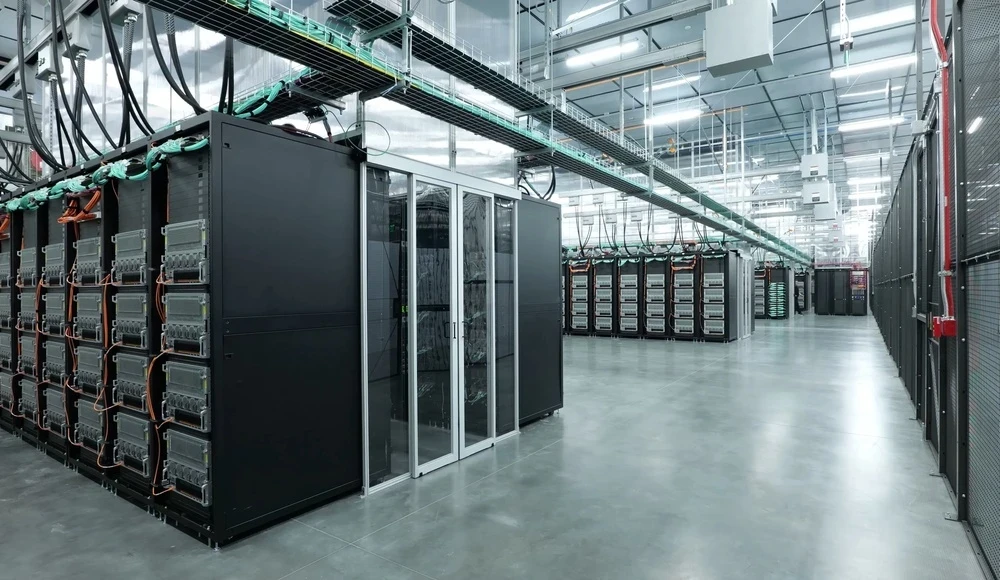
Vodafone Business, Elsewedy Electric and Cassava Technologies have announced plans to build data-centre capacity in Egypt, with an initial 20 megawatts targeted within three years and a longer-term expansion path to 200 MW.
The partners say the first phase is expected to attract about US$200 million in foreign investment, with total investment potentially reaching US$1 billion at full capacity. The project, named Africa Data Centres Egypt, is also projected by the companies to create up to 200 direct jobs and around 2,000 indirect jobs. These are projections attached to the announcement, not completed investment or jobs. (Vodacom Group announcement; Egyptian government statement)
Two related infrastructure plans
The data-centre project is separate from a second Vodafone Business and Cassava partnership focused on locally hosted AI computing. That arrangement is intended to offer GPU-as-a-Service, allowing organisations to access accelerated computing for AI applications while keeping data hosted in Egypt, according to the partners.
Egypt’s communications minister said the government is preparing an integrated national data-centre strategy. The government has framed local hosting as a way to expand the country’s capacity to store and process data, while the companies are positioning the projects to serve domestic and international customers.
Local infrastructure can give businesses another option for where their data is stored and processed. But describing a facility as “sovereign” does not, by itself, explain its security practices, who controls the systems or which workloads customers will be able to run there. Those details will become more meaningful as services are built and made available.
Capacity is only the first milestone
The announced 20 MW starting capacity and 200 MW expansion target are significant plans, but they depend on financing, construction and reliable operations. The announcement does not provide a specific date when the data-centre capacity or AI-computing services will be ready for customers.
Data centres also require dependable power and cooling. Egypt’s minister said the government’s planned strategy is expected to address operational efficiency and sustainability, among other priorities. The project’s progress will therefore be judged not just by its headline capacity, but by whether it is delivered on schedule and can operate reliably and sustainably.




Discussion
0 Comments
No approved comments yet. Start the conversation.