
Six additional Zimbabwean schools have received satellite internet through the ITU–SES partnership, taking the programme’s reported national total to seven against a target of 10 in 2026. The milestone expands access, but leaves a larger question for education officials: how consistently will teachers and learners be able to use it?
The 27 October report identifies Chesa Primary in Umguza, Harawe Primary in Masvingo, St Michael’s Secondary in Chipinge, Gungwa Primary in Mt Darwin, Gababe Primary in Gokwe South and St Boniface Primary in Chegutu as the latest sites.
The rollout involves ITU, SES, POTRAZ, the ICT ministry and the education ministry under Partner2Connect. The published account does not provide installation prices, monthly bandwidth allocations or a school-by-school maintenance plan.
The connection is the beginning of the service
Satellite access can make a school reachable without waiting for a new terrestrial route. Once installed, the useful service still depends on local Wi-Fi, power, devices and someone able to diagnose faults.
A working terminal is of limited classroom value if learners cannot access a computer or a teacher has no time or support to prepare a digital lesson. Equally, sharing a small number of devices can still be useful when timetables and learning activities are designed around that constraint.
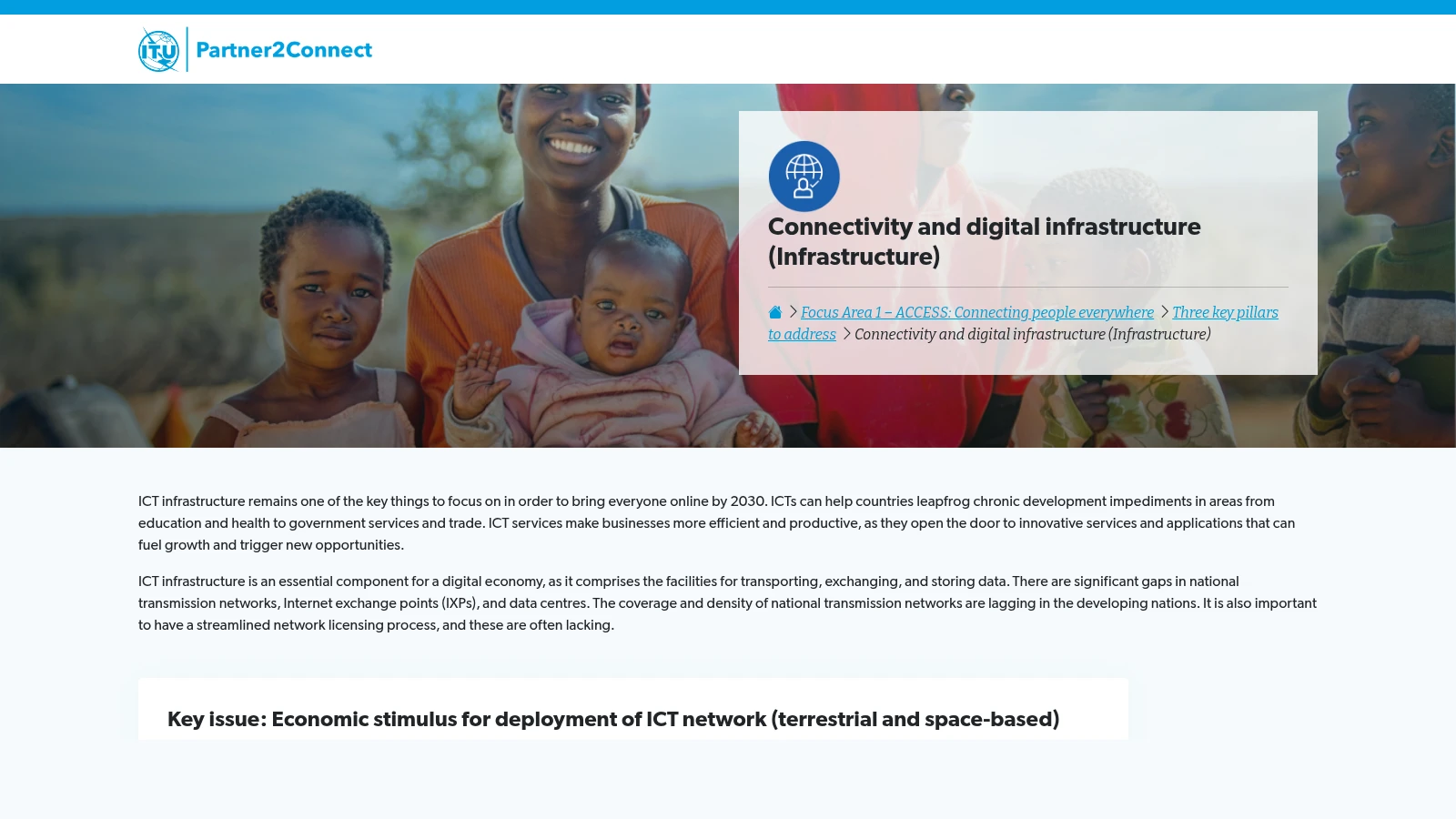
ITU’s broader Partner2Connect framework treats meaningful connectivity as more than network construction. Its discussion includes viable operating models, local conditions and ways to reach underserved communities. That provides useful context, although it does not supply specifications for these Zimbabwean installations.
Who pays after installation?
A school needs to know who meets recurring service charges, how long the funded period lasts and what happens when equipment needs replacement. An initial donation can leave a difficult budget gap if those responsibilities are unclear.
The same applies to electricity. The rollout announcement does not establish the backup-power arrangement at each site. It would be premature to assume every installation has solar support or can remain online through an outage.
A transparent operating record could show the funding period, equipment custodian, fault-reporting contact and expected repair time. These are ordinary service details, but they determine whether connectivity becomes dependable.
Measure classroom use alongside uptime
A useful first-term review would record connection availability during school hours, the number of usable devices and how many classes regularly access learning resources. It should also explain what teachers are doing with those resources.
Those are proposed measures, rather than results the programme has already demonstrated. The sources reviewed do not provide before-and-after evidence of learning outcomes or detailed usage figures.
Teacher preparation deserves its own budget and timetable. Training should connect online tools to actual subjects and classroom conditions. Child protection, account management and supervision also need clear ownership as access expands.
Three more sites remain within the stated target
The seven-school count describes this particular initiative, rather than the total number of connected schools in Zimbabwe. Reaching the programme’s target would add three more installations, but the reviewed announcement does not identify their delivery dates.
The first seven sites offer an opportunity to publish an operating model that later schools can learn from. Reliable records of cost, uptime, maintenance and teaching use would help distinguish a repeatable education service from an installation milestone.
Success should eventually be visible in an ordinary school week: teachers can prepare lessons, learners can use suitable resources, faults get repaired and the connection remains funded after the launch attention has passed.



Discussion
0 Comments
No approved comments yet. Start the conversation.