

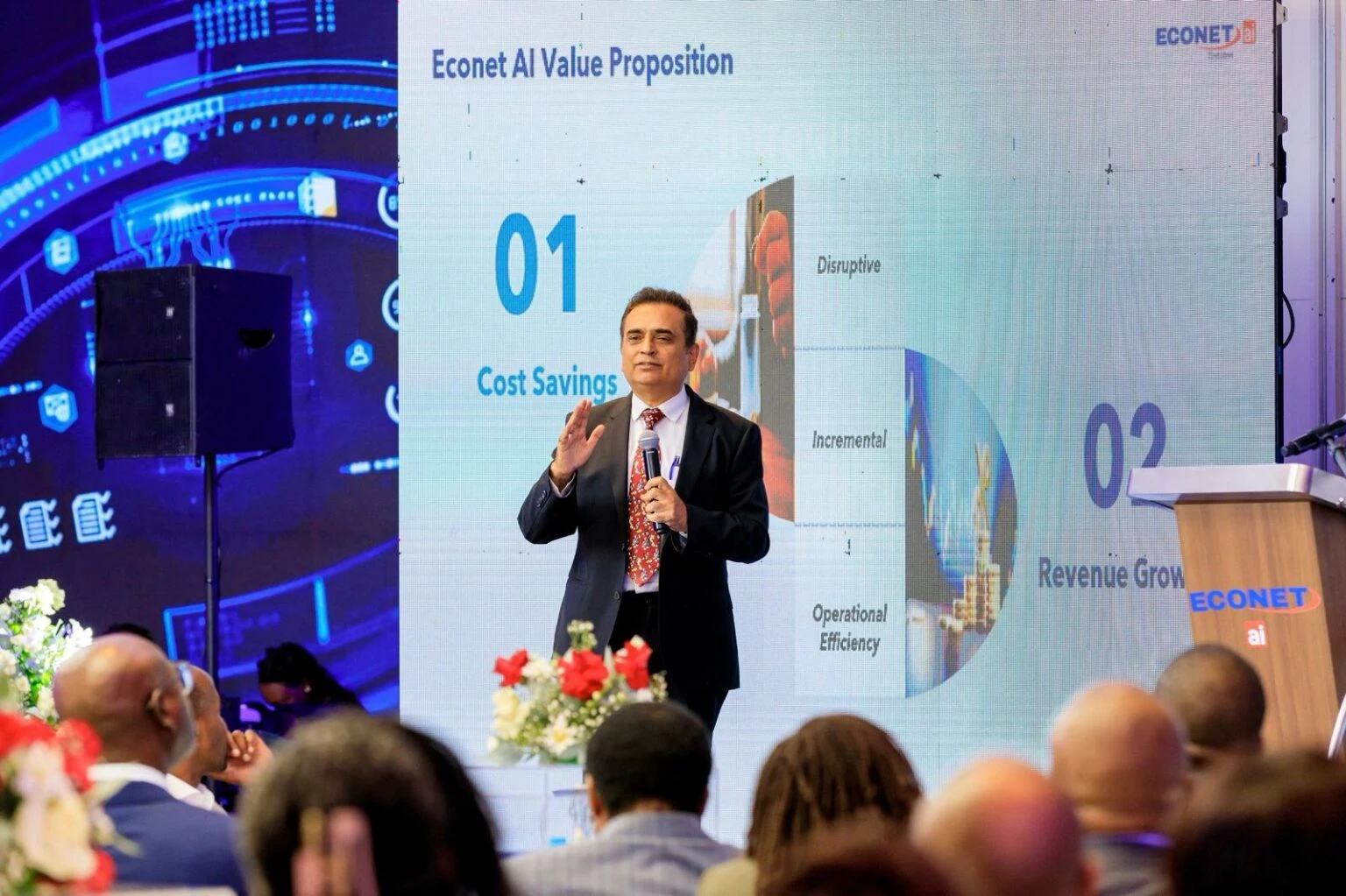
Econet is building an artificial-intelligence business around both people and deployment. In July, its AI subsidiary announced a recruitment drive for more than 100 engineers, including specialists in computer science, electronics, electrical engineering and robotics. The company said it was onboarding more than 70 positions at the time and planned to train recruits before assigning them to product development, customer support and work with business clients.
The hiring announcement is a company-reported target, not confirmation that all roles have since been filled. Econet’s half-year report, published on 1 October, gives a wider picture of where the group says it is applying AI: customer experience, network optimisation, operational efficiency, product innovation and new revenue streams. (Econet AI hiring announcement; Econet half-year interim report)
From an AI unit to operating systems
The group’s 2026 integrated report describes Econet AI as a unit developing sector-specific services for Zimbabwean businesses and bringing cloud-based computing capacity to the market through partnerships. It also identifies Yamurai, a voice-enabled customer-service chatbot, and AI-assisted network automation as examples of its work.
These company materials show the range of the ambition, but they do not independently measure customer outcomes. The interim report does not update how many engineers have actually joined, quantify savings from automation or detail how often customers use the AI services. Those are important distinctions when a business announcement moves from recruitment and pilots to claims of operational impact.
The execution questions
A large engineering cohort could strengthen local product development and help businesses experiment with AI. It also raises practical questions: what training the recruits receive, how much work is done in Zimbabwe, which solutions are built for local needs and how customer data is handled.
Econet’s public reporting suggests AI is becoming part of a broader corporate transition rather than a standalone experiment. The next evidence to watch is concrete deployment: named products, user adoption, service performance and transparent reporting on the workforce the company set out to hire.





Discussion
0 Comments
No approved comments yet. Start the conversation.